Water Damage Restoration in Fair Oaks, GA
Fair Oaks is the unincorporated pocket of Cobb County wedged between Smyrna and Marietta, west of Atlanta Road and south of Dobbins Air Reserve Base, about 2 square miles at 1,100 feet with about 9,000 people. It was named for its oaks and built almost all at once: the population more than doubled between 1950 and 1960, from about 3,200 to about 7,500, as the Lockheed plant next door hired and the farmland filled with small brick and frame ranches on crawl spaces. It has barely grown since, which means the housing is what it was in 1960, with sixty-five-year-old plumbing under sixty-five-year-old floors.
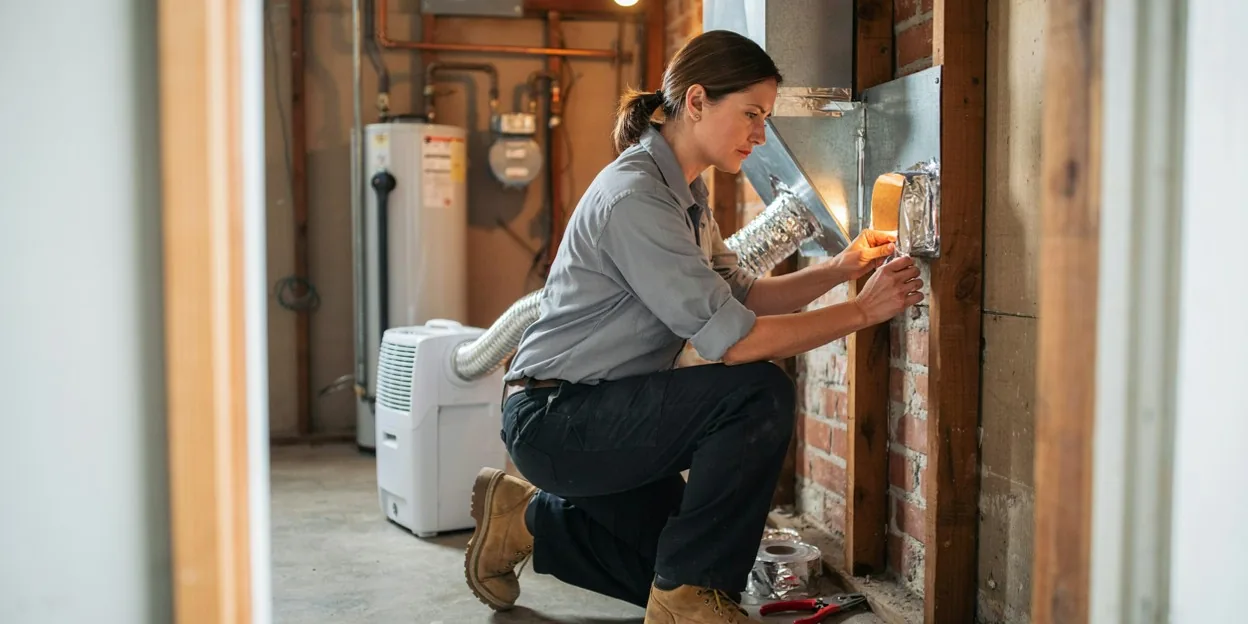
That is the Fair Oaks water loss: an original galvanized or copper supply line under the house that finally lets go, often in a freeze, and runs onto the clay until the floor above goes soft. The ductwork under those houses is old too, and it sits low enough to be in the water.
This site puts Fair Oaks homeowners through by phone to an independent local water damage provider. The provider goes under the house first and meters the joists before anything upstairs is decided.
Fair Oaks water damage under a 1950s ranch
Water on the clay under the house is a crawl space water extraction, and the soaked insulation and vapor barrier come out with it. A line that split under the floor in a hard freeze is burst pipe water damage. A hardwood floor that cupped over the wet crawl space is a water extraction and a drying job from both sides at once.
Jets overhead, a university next door, and a county permit desk
The runway at Dobbins Air Reserve Base, home of the 94th Airlift Wing, ends just north of the neighborhood, and Life University sits on its eastern edge along Barclay Circle. Fair Oaks is unincorporated, so a rebuild that replaces drywall, plumbing, or wiring is permitted through Cobb County Community Development, not Smyrna or Marietta. Ask the provider to photograph the failed pipe before the plumber replaces it.
Call (770) 830-3578 and say what is under the floor. We put you through to an independent local water damage provider serving Fair Oaks.
Services Available in Fair Oaks
Water Extraction
Standing water pulled off hardwood, tile, carpet, and slab on any floor of a Smyrna house, then the first meter readings on walls and subfloor.
Structural Drying
Air movers and dehumidifiers run against daily readings until studs, subfloor, and drywall reach their dry target in a humid Georgia house.
Crawl Space Water Extraction
Standing water pumped from under a 1950s ranch or split-level, then the joists, subfloor, and ductwork metered and dried from below.
Burst Pipe Water Damage
Cleanup after a supply line split in a crawl space, attic, or exterior wall during a hard freeze, and drying of every room the water reached.
Creek Flood Cleanup
Mud, silt, and contaminated water removed after Nickajack, Rottenwood, or Sweetwater Creek came into a lower level, with wet materials cut out and the shell dried.
Water Heater Leak Cleanup
A tank that let go in a hall closet, garage, or attic platform, with the floor, walls, and rooms below pumped out and metered.
Ceiling Water Damage Repair
A stained or sagging ceiling under a second-floor bath or an attic water heater opened, dried above, and made ready for repair.
Roof Leak Water Damage
Wet attic insulation, ceilings, and walls dried after a spring thunderstorm or straight-line winds lifted shingles and let rain inside.