Water Damage Restoration in Austell, GA
Austell grew up around a railroad junction and a mineral spring. The town was incorporated in 1885 and named for the banker who brought the railroad through, and the Norfolk Southern still runs through the middle of it. It had about 7,700 people in 2020, in a mix of early 1900s frame houses near the tracks, 1950s and 1960s ranches on crawl spaces along Austell Road and Maxham Road, and 1990s and 2000s subdivisions on the flatter land toward Sweetwater Creek and the Douglas County line.
Sweetwater Creek is why Austell is on the map for water damage. Between September 15 and 22, 2009, a week of storms put more than 20 inches of rain on parts of Cobb and Douglas, and the creek crested 20 feet above flood stage, more than double its old record. Hundreds of houses in Austell took water to the ceiling, Clarkdale Elementary flooded to the roof, and Cobb County later bought and cleared more than 75 flood-prone homes. The floodplain has not moved.
This site puts Austell homeowners through by phone to an independent local water damage provider. The provider meters the lower level and the crawl space and writes the scope from those numbers.
Austell water damage when Sweetwater Creek comes up
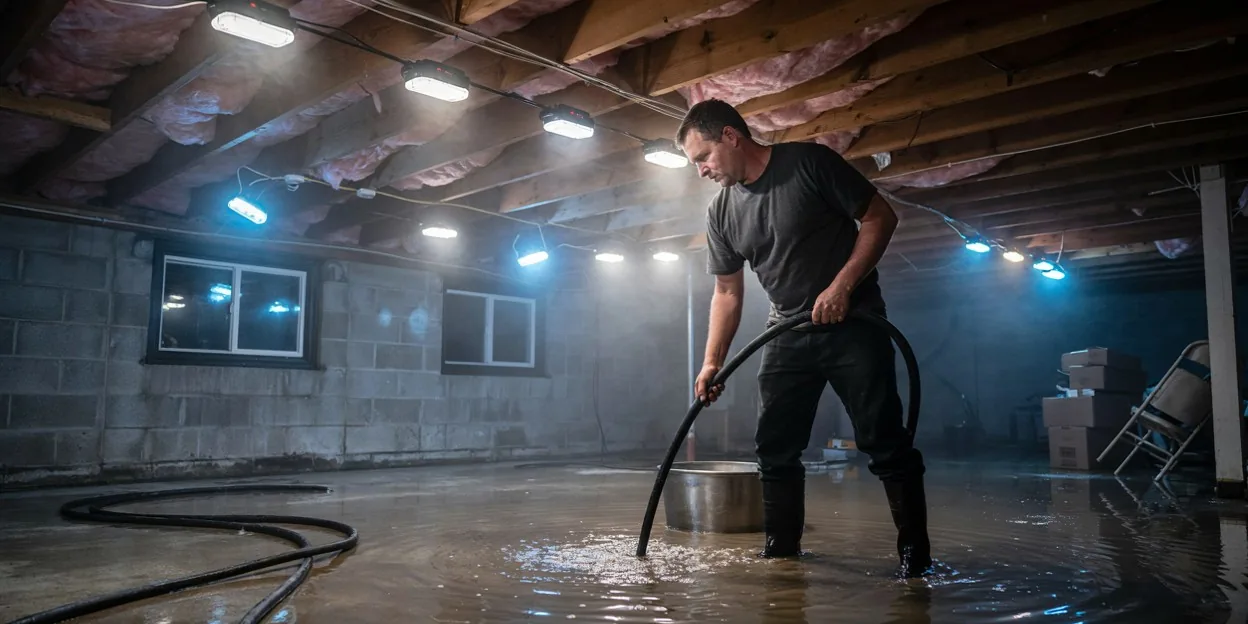
Creek water in a house is a creek flood cleanup, and the carpet, pad, drywall, and insulation it touched come out. Standing water under a 1950s ranch after a pipe failure is a crawl space water extraction. A ceiling stained under a bath in one of the newer two-story houses is ceiling water damage repair.
Flood maps, elevation certificates, and the hospital up the road
The City of Austell runs its own floodplain management program after 2009, with flood maps, elevation certificates, and flood zone lookups through its public works department, and its permit desk handles the rebuild. Wellstar Cobb Medical Center on Austell Road is the hospital for south Cobb, and it is where a cut from wet debris or a fall on a slick basement floor ends up during a cleanup.
Call (770) 830-3578 and say where the water came from and how high it got. An independent local water damage provider serving Austell takes it from there.
Services Available in Austell
Water Extraction
Standing water pulled off hardwood, tile, carpet, and slab on any floor of a Smyrna house, then the first meter readings on walls and subfloor.
Structural Drying
Air movers and dehumidifiers run against daily readings until studs, subfloor, and drywall reach their dry target in a humid Georgia house.
Crawl Space Water Extraction
Standing water pumped from under a 1950s ranch or split-level, then the joists, subfloor, and ductwork metered and dried from below.
Burst Pipe Water Damage
Cleanup after a supply line split in a crawl space, attic, or exterior wall during a hard freeze, and drying of every room the water reached.
Creek Flood Cleanup
Mud, silt, and contaminated water removed after Nickajack, Rottenwood, or Sweetwater Creek came into a lower level, with wet materials cut out and the shell dried.
Water Heater Leak Cleanup
A tank that let go in a hall closet, garage, or attic platform, with the floor, walls, and rooms below pumped out and metered.
Ceiling Water Damage Repair
A stained or sagging ceiling under a second-floor bath or an attic water heater opened, dried above, and made ready for repair.
Roof Leak Water Damage
Wet attic insulation, ceilings, and walls dried after a spring thunderstorm or straight-line winds lifted shingles and let rain inside.