Structural Drying in Smyrna, GA
The plumber fixed the split line under the house on Tuesday, and you ran two box fans in the hallway all week. The floor looks fine. But the hall still smells like a wet basement, the hardwood by the bath is a little higher at the seams than it was, and the baseboard in the back bedroom has a dark line along the bottom. This site puts you through to an independent local provider who dries houses in Smyrna and south Cobb after the water is gone.
Why a house in Georgia does not dry on its own
Wood, drywall, and insulation give water back slowly, and they give it back into the air around them. In a Smyrna July that air is already close to saturated, so a fan pushing outside air across a wet subfloor moves water around the room instead of out of it. Drying a house here means moving air across the wet material with air movers and pulling the moisture out of that air with a dehumidifier, in a space closed off from the humidity outside. The crawl space is part of that space, because in a ranch the subfloor is wet from below.
What the crew sets up and why it runs for days
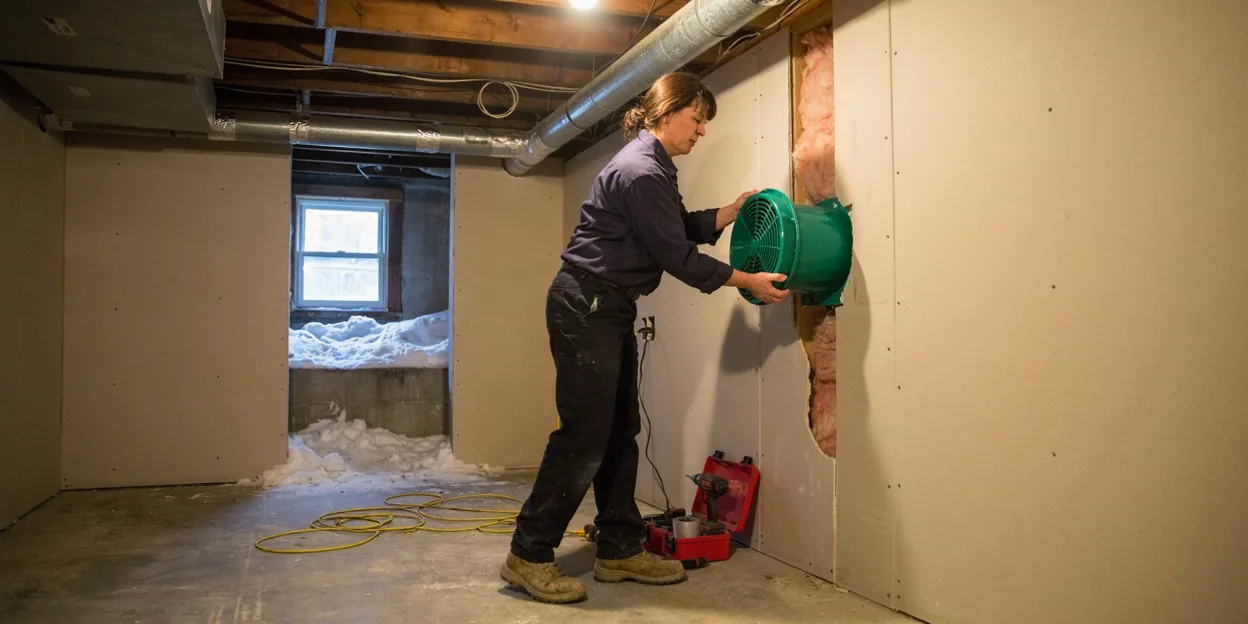
On the first visit the crew meters every material the water reached and writes the numbers down. Then they place air movers so air sweeps the wet floor, the base of the walls, and the underside of the subfloor in the crawl space, and set a dehumidifier sized to the room. They come back each day to read the same spots. When the readings match a dry room upstairs or across the house, the job is done, and not before. Three to five days is common; a crawl space full of wet clay takes longer.
What you can do while the equipment runs
Leave it on. Every hour it is off, the humidity climbs back and the wet materials stop giving up water. Keep the doors between the drying zone and the rest of the house closed, keep the thermostat where the crew set it, and do not open windows to air the place out. If the crawl space is part of the job, keep the access door shut. Ask the crew to show you the readings each day so you can see the numbers move.
What stays, what gets opened, and how the readings decide
Framing and subfloor nearly always dry in place. Hardwood that was wet less than a week has a real chance if it is dried from above and below at the same time. Drywall that reads wet a foot up the wall is cut, because the insulation behind it is holding water the fan cannot reach. Cabinets are drilled at the toe kick so air can move under them. If the water was contaminated, or if the wet material sat for weeks before anyone found it, more comes out. That is what water extraction and drying are for: the readings, not the way the surface looks, make the call.
Crawl spaces, clay, and the drying job under a Smyrna ranch
A 1950s or 1960s Smyrna ranch sits on block piers over a dirt crawl space, and the red clay under it drains slowly. After a leak, the water pools on the clay and keeps the joists wet from below long after the floor above looks dry. Crawl space water extraction pumps the standing water off the clay, pulls the soaked vapor barrier, and puts the drying equipment under the house where the wet wood is. In a townhome on a slab the problem is the reverse: the wet material is in the ceiling and wall cavities, and the drying goes on above your head.
A hard freeze like the one on Christmas Eve 2022 leaves split lines that ran for hours before the thaw exposed them, so the wood has a head start on the crew. That is a burst pipe water damage job, and the drying is most of it.
Whether a policy pays for the drying depends on what caused the water and what the policy says. This site cannot read it. The drying log the crew keeps, with readings and dates, is what your adjuster asks for.
Calling about a house that still smells wet
Say what got wet, when the water stopped, and what has been done since. Mention a crawl space, a cupped floor, or a stained baseboard. Keep the property address and a number we can call back within reach. Call (770) 830-3578.